Room to Pause: Designing Everyday Errands Around Reliable Rest Stops
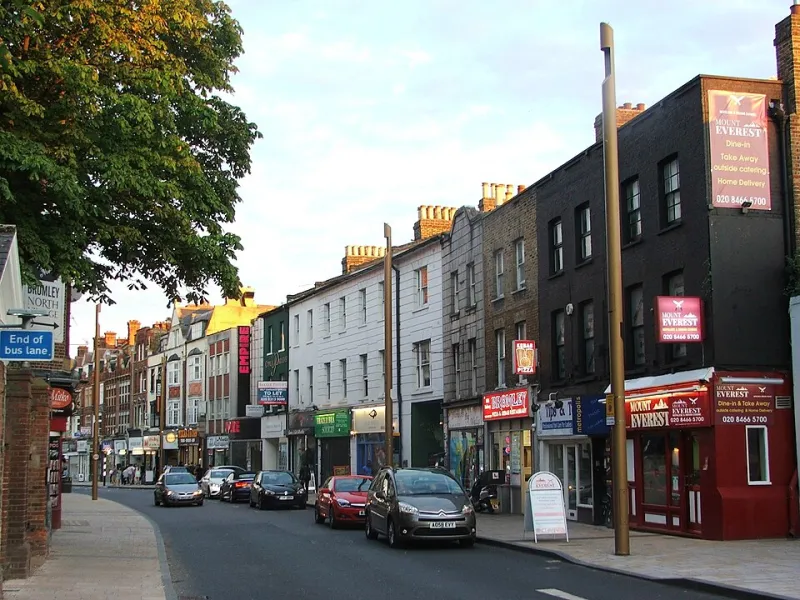
Photo: Chris Whippet , CC BY-SA 2.0, via Wikimedia Commons
Start with the route, not the resolve
A common approach to errands with multiple sclerosis is to set out with the best of intentions and hope that energy holds. That is understandable, but it places a great deal of trust in a symptom that is not always predictable. A more dependable method is to treat rest as part of the journey from the outset. The question is not whether a pause will be needed, but where it can reliably be taken.
This is not about lowering expectations. It is about designing a route that has room in it. A short high street trip, a visit to the Post Office, a pharmacy collection or a supermarket shop can all be planned around known places to sit, shelter and use a toilet. In practical terms, the route becomes a sequence of manageable stages rather than one continuous test of endurance.
For people living with MS, fatigue can accumulate quietly. A journey that feels straightforward at 10am may feel considerably different by midday. Mapping rest stops in advance does not prevent that shift, but it does provide options when it occurs. It also reduces the mental load of scanning every street for a bench while already tired.
A three-layer pause plan
It helps to think of rest stops in three layers. The first is the everyday pause: a bench in a pedestrianised area, a seat outside a supermarket, a low wall in a market square or a bus shelter. These are the quick stops that break up walking without requiring a purchase or a change of plan.
The second layer is the indoor fallback. This might be a local library, a department store café, a community centre with public seating, a shopping centre concourse or a church that welcomes visitors. These places are particularly useful in poor weather or when a longer sit is needed. Some libraries offer quiet seating and accessible facilities without any expectation to buy anything, although opening hours vary and should be checked.
The third layer is the essential facility: an accessible toilet. This is not simply a convenience. For some people with MS, knowing where a suitable toilet can be found is the difference between making a journey and postponing it. In the UK, many councils publish accessible toilet information, and some venues are listed as Changing Places toilets where a hoist and changing bench are available. A Radar key can be useful for some locked accessible toilets, though not all facilities use the same system.
Mapping the practical details
A useful first step is to choose one regular errand and review it without rushing. Look at the route on a map, or use street-level images, and note the places where sitting is possible. It may help to mark three categories: sure stops that are almost always available, possible stops that depend on opening hours or footfall, and essential stops such as toilets or a pharmacy counter.
It is worth checking details that are easy to overlook. Is the bench in full sun or under shelter? Is there a step or a kerb between the pavement and the seating? Does the café have a step-free entrance and enough space to move between tables? Does the library have a lift, and is it working? These questions are not fussy. They are the practical information that makes a route usable rather than merely plausible.
The route itself can also be shaped to reduce effort. A simple loop is often easier than an out-and-back journey because it avoids retracing the same ground when tired. Placing the most important errand early in the route can help, while the return leg can be kept shorter or routed past a known indoor stop. Where possible, it is useful to identify a natural turning point: a place where the errand can be ended early without wasting the journey.
Wet-weather contingencies
UK weather makes a single plan insufficient. A bench that is pleasant in dry weather may be exposed and uninviting in wind and rain. For each outdoor stop, it is worth naming an indoor alternative nearby. A library, a supermarket café, a shopping centre or a covered market can serve as a wet-weather substitute.
This does not need to be elaborate. A short note on a phone, or a paper list kept with shopping bags, can record the alternatives. The aim is to avoid making decisions in the moment, when fatigue and weather are already competing for attention. If the indoor option involves a purchase, it is reasonable to decide in advance whether that is acceptable or whether a free public seat would be better.
It is also sensible to consider the journey home. A wet walk back from the bus stop can undo the benefit of a careful outward route. Identifying a café near the final stop, or a shop entrance with a canopy, can provide a brief pause before the last stage. Small adjustments of this kind are often more useful than ambitious plans that depend on everything going smoothly.
The time budget
Rest stops take time, and that time should be included in the plan rather than treated as an unexpected delay. A journey that might take forty minutes without pauses may need an hour or more with them. Building in a buffer reduces the pressure to hurry and makes it easier to stop when needed.
A useful approach is to set a gentle limit before leaving: perhaps one main errand and one secondary task, with a clear intention to abandon the second if the day turns. This is not defeat. It is sequencing. The same principle applies to the number of stops. Two short pauses may be more helpful than one long one, particularly if the route involves standing in a queue or walking further than expected.
Dignity and disclosure
Some people are comfortable explaining that they need to sit down; others prefer not to. Both approaches are valid. A simple phrase such as “I’ll need to pause for a moment” is often enough in a café or shop, and many venues are accustomed to people resting briefly. Where a longer stop is needed, asking a member of staff whether seating is available can be straightforward and discreet.
It can also help to carry a small card or note explaining that the person has a health condition and may need to sit or use a toilet. This is not necessary for everyone, but it can reduce the effort of explaining during a tiring moment. The overall aim is to preserve choice: to have a route that works without requiring a full account of MS at every stop.
A route that respects the day
The most useful errand plan is not the most detailed one. It is the one that can be followed on an ordinary day and adjusted on a difficult one. A few known benches, one reliable indoor stop and a clear idea of where an accessible toilet can be found may be enough to make a regular journey feel less precarious.
Rest is not an interruption to the errand. It is part of how the errand is completed. Planning for it in advance turns a vague hope into a practical arrangement, and leaves room for the day to be managed with a little more steadiness.